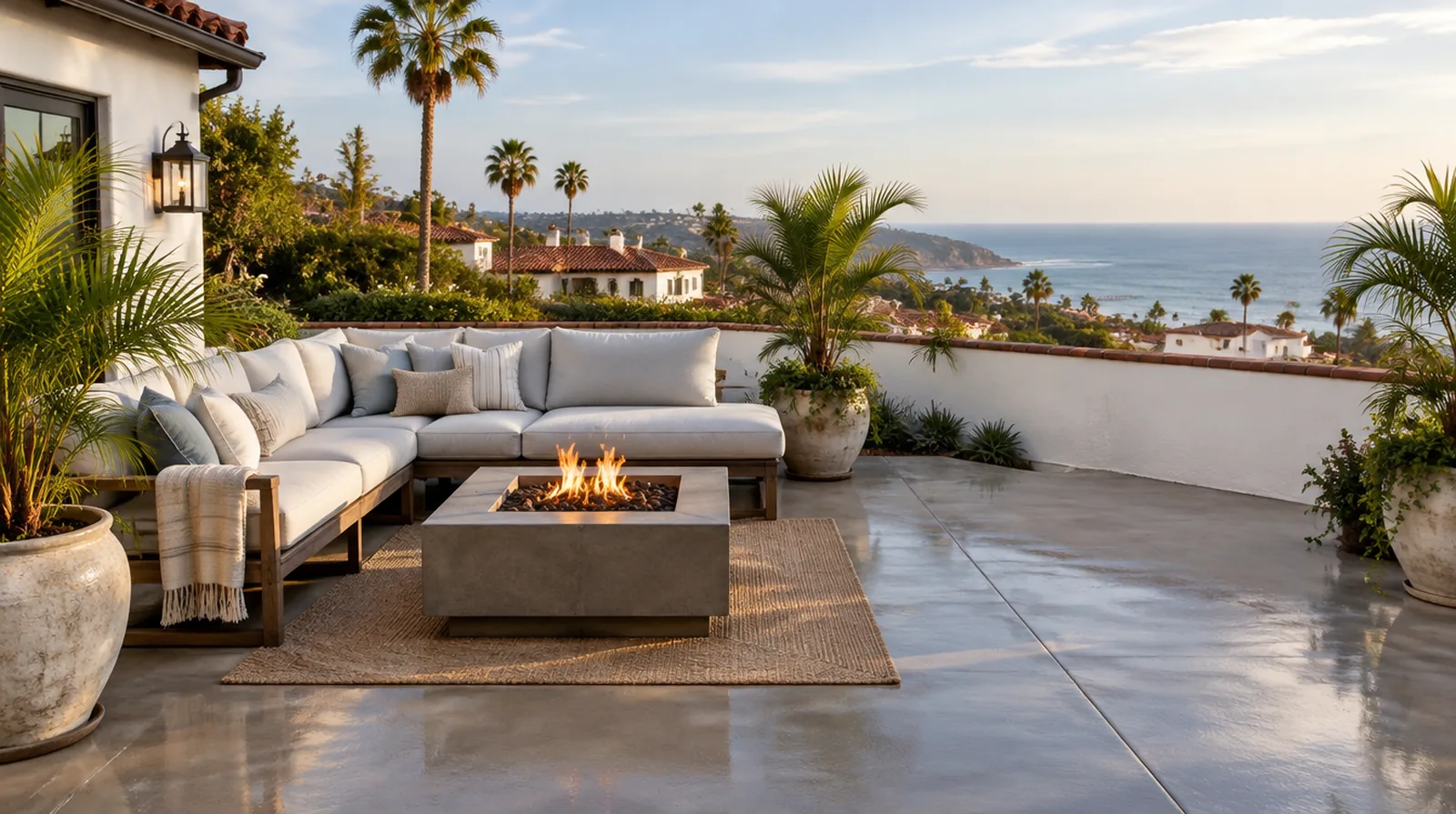
Why outdoor concrete needs sealing here
Outdoor concrete near the ocean faces salt in the air, moisture from the marine layer, strong sun and sprinklers that run almost every day. Bare concrete soaks all of it in. Over time you see white efflorescence, rust stains from sprinklers, flaking surfaces and dark mildew in shady corners. A good sealer slows all of that down and makes cleaning much easier.
Types of sealers
- Penetrating sealers soak in and repel water and salt without changing the look. They are breathable, so moisture can still escape from below.
- Acrylic sealers form a thin film that can add a wet look or enhance color, with good UV resistance.
- Polyurethane and polyaspartic sealers give tougher, longer-lasting protection for high-traffic areas.
For most coastal patios and walks, we recommend a breathable penetrating sealer, sometimes paired with a color-enhancing topcoat.
Our process
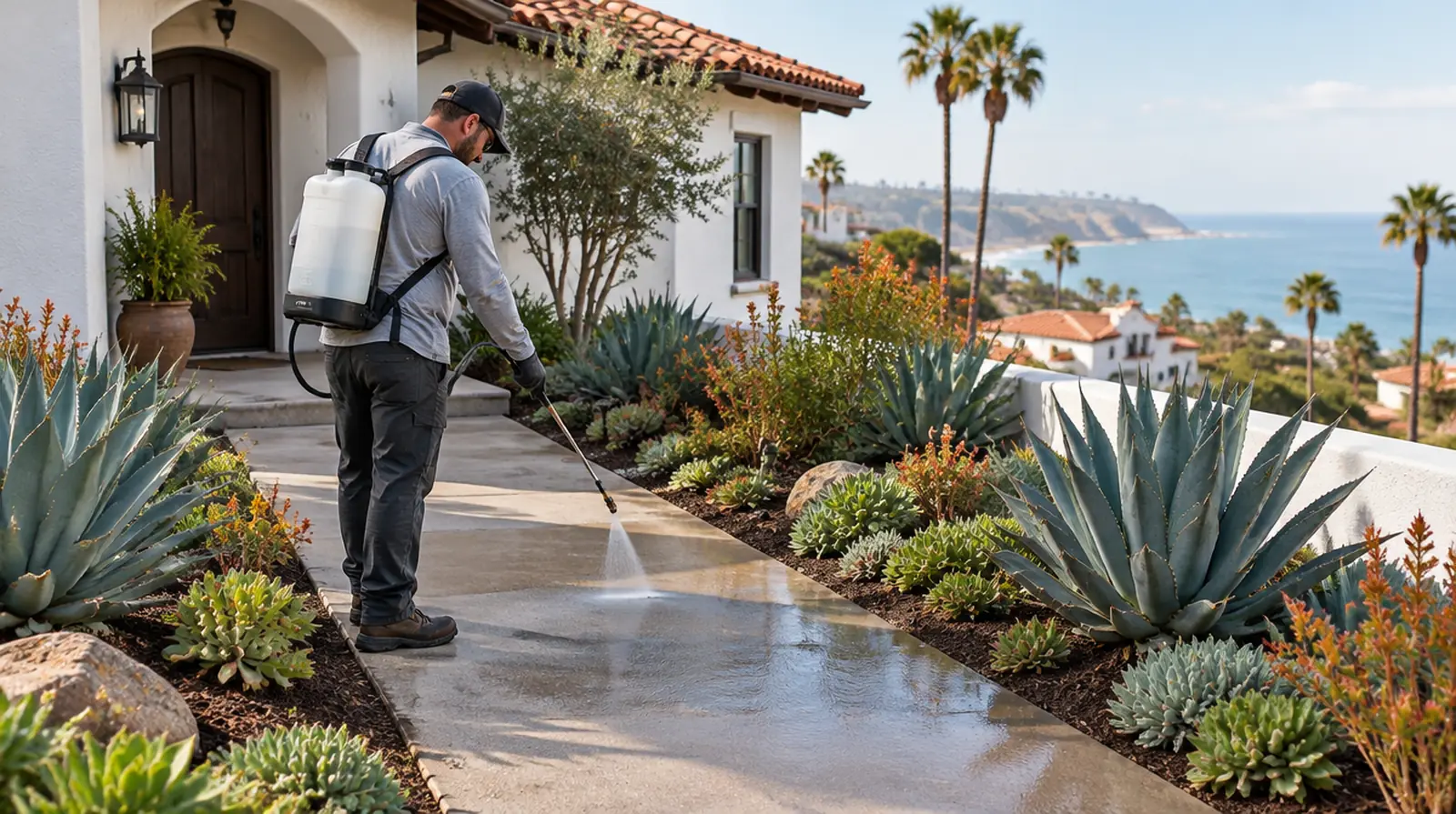
- Pressure wash and clean the surface.
- Treat salt bloom, rust and mildew.
- Repair small cracks and chips.
- Let the concrete dry fully.
- Apply sealer evenly by spray or roller.
- Add anti-slip grit for pool decks and steps.
Pool decks and spas
Pool decks need a sealer that resists chlorine and salt water and stays grippy underfoot. We use slip-resistant additives and products made for wet barefoot traffic. Sealing also helps keep the deck cooler and reduces staining from pool chemicals.
Pavers and stamped concrete
We seal pavers to lock in joint sand, prevent weeds and bring back color. Stamped and colored concrete often looks faded after a few years in the sun. A color-enhancing sealer can restore it.
How often to reseal
Penetrating sealers usually last several years. Film-forming sealers may need a refresh every two to three years in full sun. We will recommend a schedule based on the product and exposure.
Questions
Will sealing make my patio slippery?
Some sealers can. We add grit where people walk barefoot or in wet shoes.
Can you seal over old sealer?
Sometimes. If it is peeling, we remove it first.
How long before I can use it?
Usually foot traffic the same day and furniture the next day.
For drives, see driveway coating. Want a tougher finish for a covered patio? Ask about polyaspartic.
Reading what your concrete is telling you
Outdoor concrete shows its problems if you know what to look for. White, chalky streaks are efflorescence, which means water is moving through the slab and carrying salts to the surface. Orange rings near sprinkler heads come from iron in irrigation water. Dark green or black patches in shady areas are mildew or algae, common on north-facing patios that stay damp under the marine layer. Rough, sandy spots mean the top layer has started to wear away. Each of those calls for a slightly different cleaning approach before sealing, and we treat them before any product goes down.
Sealing does not reverse surface wear that has already happened, but it slows it down dramatically. With the pores closed, salt and moisture stay on top where a rinse removes them, and stains lift out instead of soaking in.
Breathable protection for damp slabs
Many outdoor slabs here sit on soil that stays damp for much of the year, especially on hillside lots and around planters. Sealing those surfaces with a thick, non-breathable film can trap moisture underneath, which leads to white, cloudy patches and peeling. That is why we usually lean toward penetrating or breathable sealers for patios and walks. They keep water and salt out from above while still letting vapor escape from below.
Pairing sealing with other work
If we are already coating your garage or drive, sealing the patio or side yard during the same visit saves you a second trip and usually some cost. It also gives the whole property a consistent, well-kept look.
Sealing is also smart right after new concrete is poured, such as a patio extension, a new walkway or a spa pad. Fresh concrete is at its most porous, so once it has cured, sealing it early keeps the first stains and salt from setting in. We can coordinate timing with your concrete contractor so the slab is ready when we arrive.
Get a sealing estimate
Call (949) 429-4155 for a free estimate.